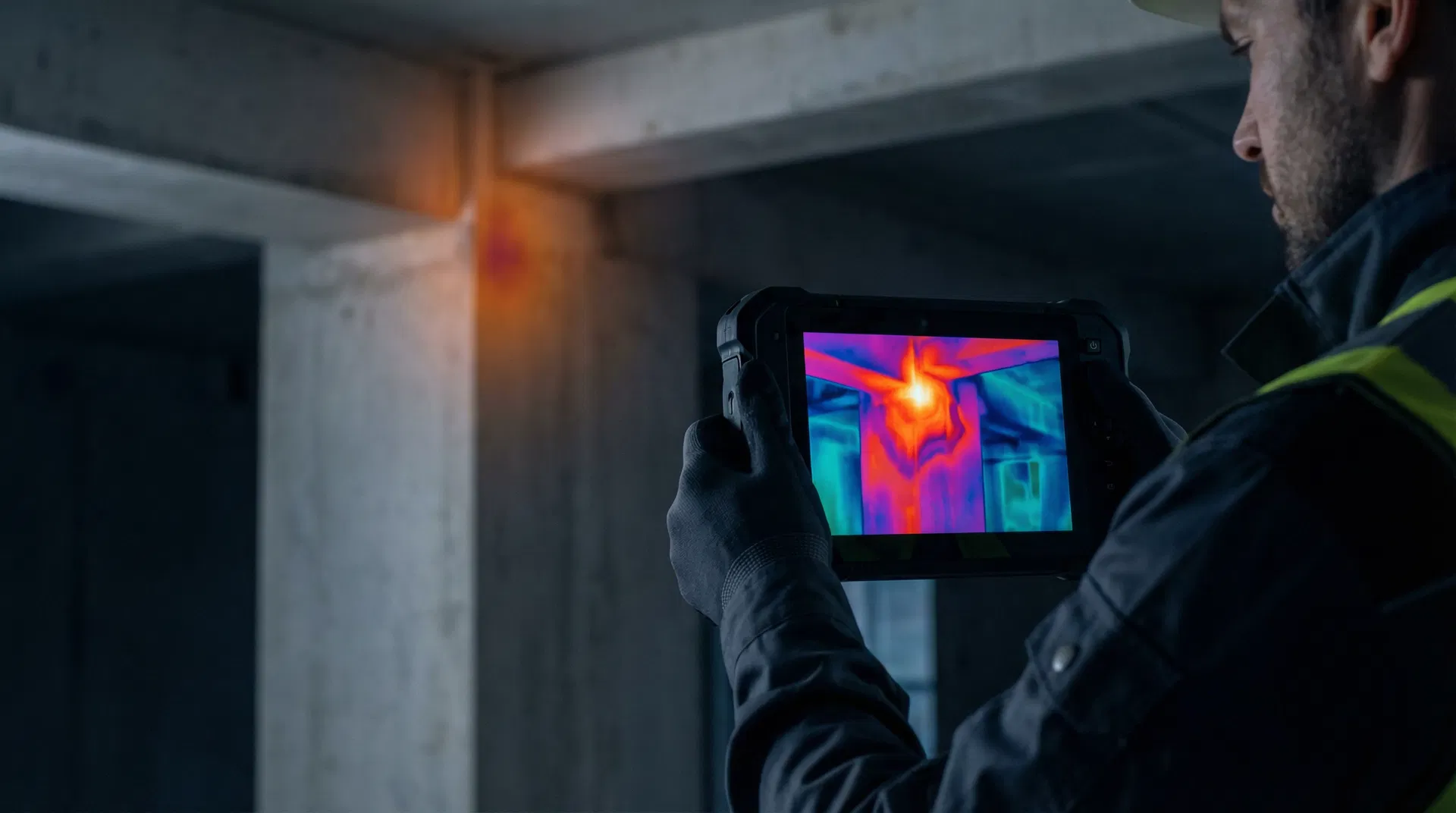
Infrared thermography camera scanning building for heat loss and insulation failures
Diagnostic Services

Infrared
Thermography

Before you spend money on new HVAC equipment or more insulation, find out exactly where your energy is going. Thermal imaging sees what a visual inspection misses.

See What Your Eyes Can't

Infrared thermography uses a thermal imaging camera to detect temperature differences across surfaces. Because heat moves through insulation and air gaps in predictable ways, a thermal camera can reveal exactly where your building envelope is failing — even when the walls look fine from the outside.

The result is a visual map of your building's thermal performance: where heat is escaping in winter, where cool air is leaking out in summer, where moisture is hiding behind walls, and where insulation has failed or was never installed correctly.

This isn't a gimmick. Thermal imaging is used by energy auditors, home inspectors, and industrial maintenance teams because it works — and because it's far cheaper than guessing.

Reading a Thermal Image
Hot / High Heat Loss
Air leaks, missing insulation, thermal bridges
Warm / Moderate Loss
Compressed or degraded insulation
Neutral
Normal thermal performance
Cool
Cold infiltration, moisture accumulation
Cold / Severe Loss
Major air leaks, no insulation present

What Thermal Imaging Reveals

Missing or Insufficient Insulation

Areas where insulation was never installed, has settled significantly, or was installed incorrectly show up immediately on a thermal scan.

Air Leakage Pathways

Air infiltration and exfiltration points — around electrical boxes, plumbing penetrations, top plates, and rim joists — are clearly visible as temperature anomalies.

Moisture & Water Intrusion

Water-damaged insulation and moisture infiltration create distinctive thermal signatures. We can identify moisture problems before they become mold problems.

Thermal Bridges

Structural elements like studs, joists, and steel framing conduct heat differently than insulation. Thermal imaging shows where these bridges are degrading your building's performance.

HVAC Duct Leakage

Leaking ductwork in unconditioned spaces wastes 20–30% of HVAC output in many homes. Thermal imaging can identify duct leakage without invasive testing.

Electrical Hot Spots

Overloaded circuits and failing electrical connections generate heat that's invisible to the naked eye but clearly visible with thermal imaging — a potential fire hazard identifier.

The Thermography Process

01

Conditions Assessment

Effective thermal imaging requires a temperature differential of at least 10°F between inside and outside. We schedule scans during appropriate weather conditions.

02

Full Building Scan

We systematically scan all exterior walls, ceilings, floors, and mechanical spaces. We document every anomaly with thermal images and GPS location data.

03

Analysis & Report

You receive a detailed report with thermal images, explanations of what each finding means, and prioritized recommendations for remediation.

04

Remediation Plan

If we find problems, we give you a clear, honest plan for addressing them — including what's cost-effective to fix and what can wait.

Is Thermal Imaging Right for You?

You have high energy bills but don't know why
You have rooms that are consistently uncomfortable regardless of HVAC adjustments
You're buying or selling a home and want a complete picture of its condition
You've had insulation work done and want to verify it was installed correctly
You're planning a renovation and want to know what you're dealing with before walls open
You manage a commercial building and want to identify energy waste before investing in HVAC upgrades
You've had moisture or mold issues and want to understand the source
The GISCO Difference

Most thermography services give you a report and leave. GISCO Corp gives you a thermal scan and the expertise to act on what it shows.

Because we're insulation contractors — not just inspectors — we can tell you exactly what remediation will cost, what the payback period looks like, and what's worth doing versus what can wait.

You don't need two contractors. You need one that can diagnose the problem and fix it.

Stop Guessing. Start Seeing.

A thermal imaging scan is the most cost-effective diagnostic tool available for buildings. Schedule yours today.